
Conversations
Halim Flowers: The Power to Create Your Own Reality
How imagination became a tool for survival, healing, and building a life beyond what once seemed possible
Conversation by Violetta Markelou
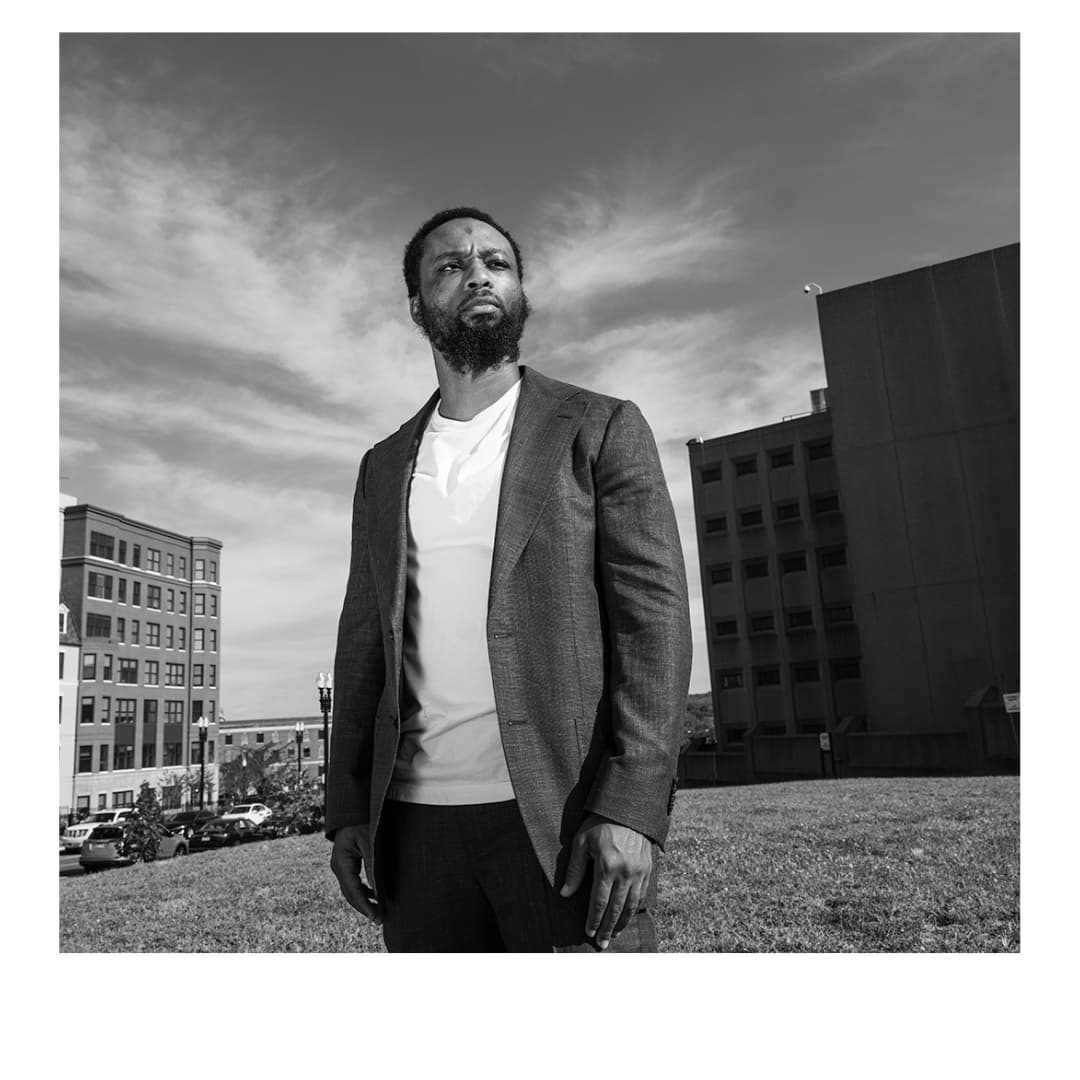
There is a moment in my conversation with Halim Flowers when he makes a connection he says he has never made in an interview before.
We are talking about childhood. About cartoons. About imagination.
Flowers grew up in Washington, D.C., during the crack epidemic, surrounded by realities that a child learns to normalize because there is no other choice. Animation offered another world.
As a seven-year-old, he wrote a short story about traveling to Ohio in a hot-air balloon. Nearly four decades later, after a life he could never have imagined in a straight line, Flowers would find himself in Ohio collaborating with the Cleveland Orchestra.
For him, that childhood story now feels like something more than fantasy.
It was evidence.
Evidence that imagination could allow him to inhabit a reality before he could physically reach it.
And years later, when Flowers entered prison at sixteen—sentenced to two life sentences and ultimately serving more than two decades—that ability to construct another world in his mind would become something far more consequential than childhood play.
It would become a way to survive.
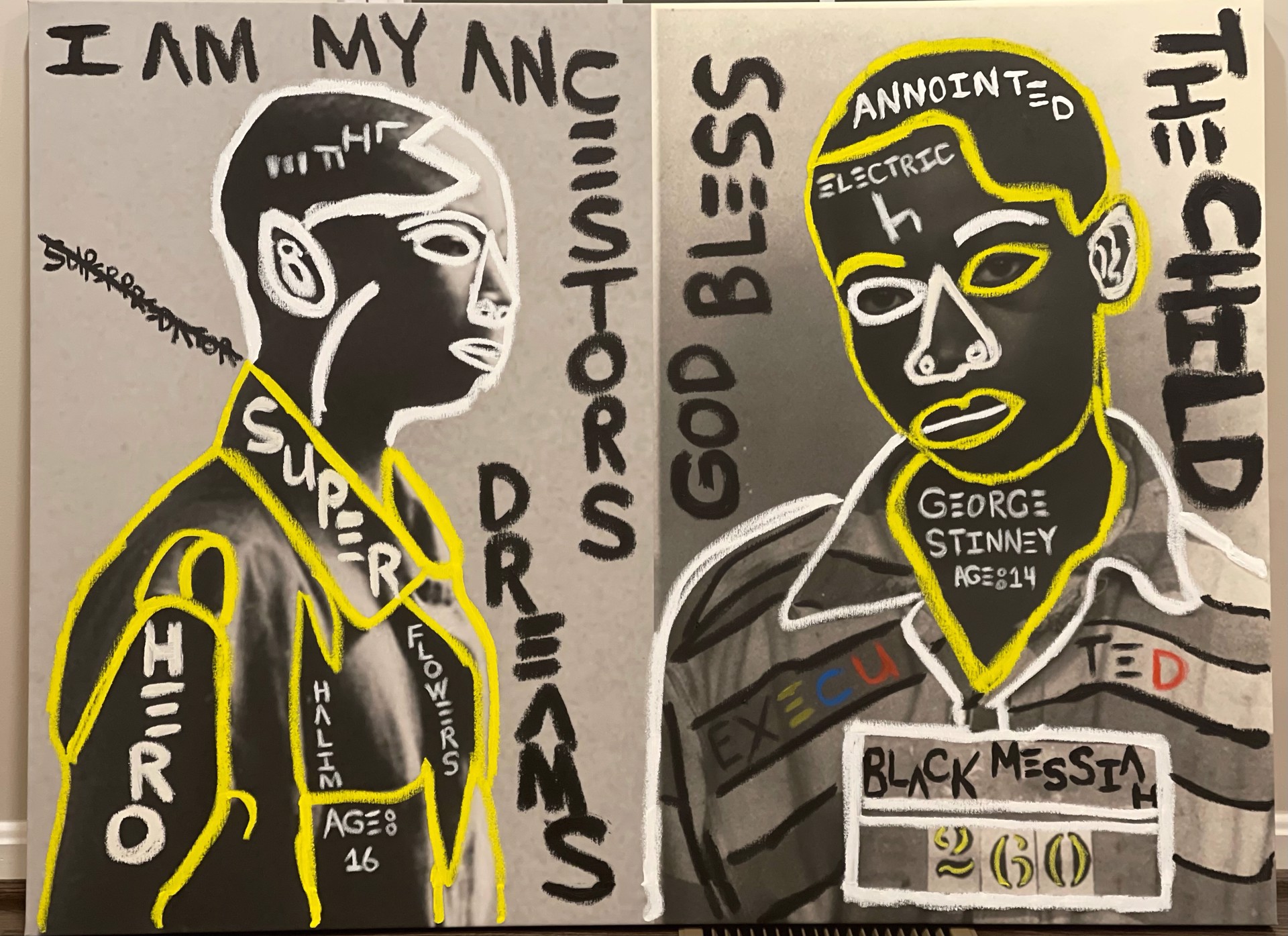
Flowers’ story was being documented almost from the beginning. As a teenager, he appeared in HBO’s Emmy-winning America Undercover documentary Thug Life in D.C., directed by Marc Levin and produced with Daphne Pinkerson. The film captured a sixteen-year-old Flowers inside the D.C. Jail, contemplating a future in which he might spend most, if not all, of his life behind bars.
More than two decades later, the camera found him again. His 2019 release was documented in Kim Kardashian West: The Justice Project, and Levin and Pinkerson reunited with Flowers after he had served 22 years. Levin has since been working on a film about Flowers, Halim: Super Predator to Super Hero, revisiting the teenager he first encountered in the D.C. jail and the life that followed.
There is something almost cinematic about that arc. The first camera encountered Flowers inside a system that had essentially told him his future was already written. Decades later, it encountered a man who had spent the intervening years imagining—and ultimately constructing—another one.
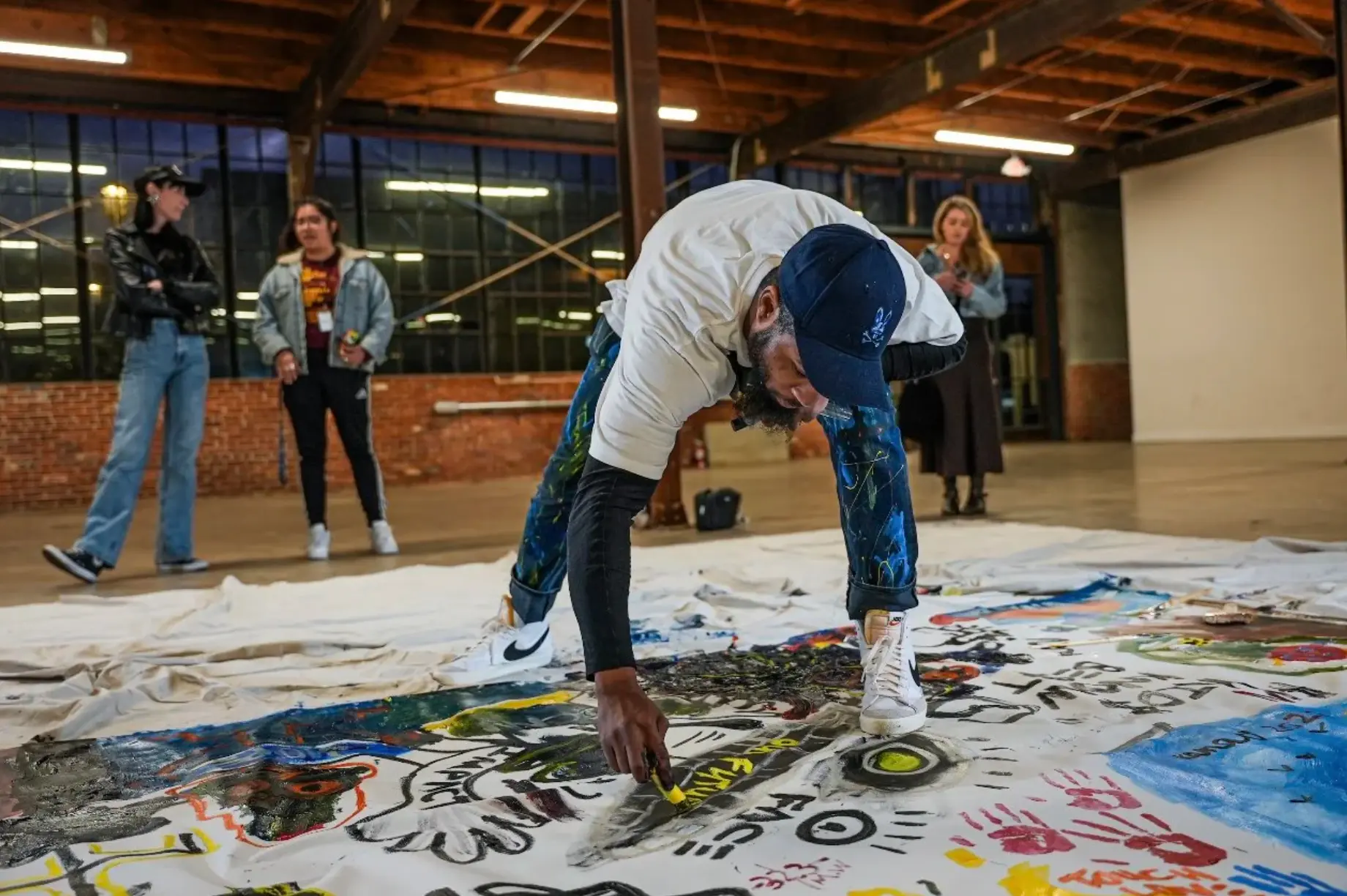
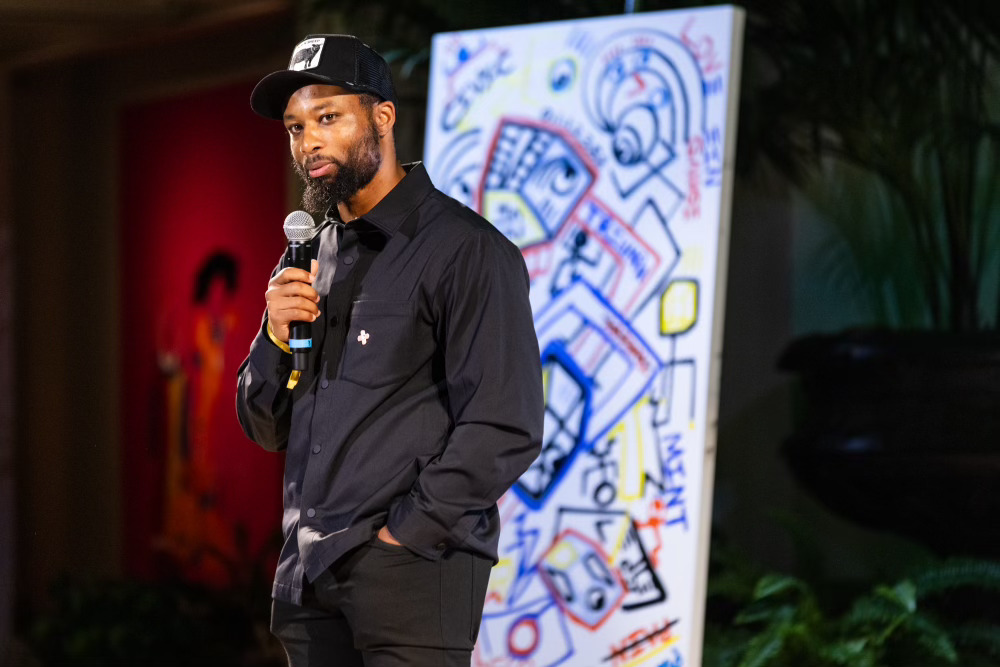
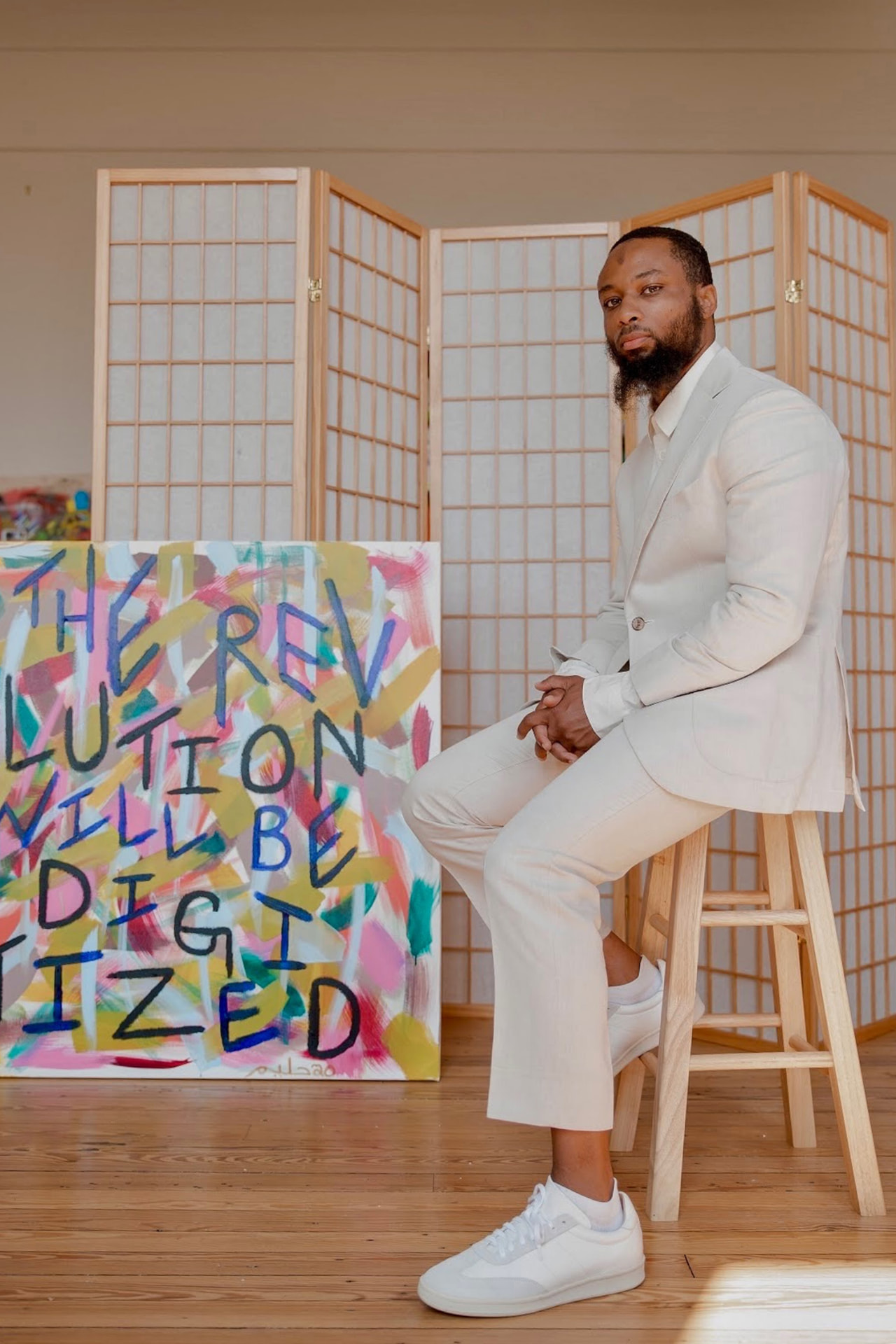
Seven years after walking out of prison, Flowers has built an extraordinary career. His work is exhibited internationally and has appeared in Marking Time: Art in the Age of Mass Incarceration, an exhibition organized by MoMA PS1. Most recently, his journey brought him back to Ohio, where he created an original body of work for the Cleveland Orchestra’s 2026 Mandel Opera & Humanities Festival. His exhibition, It Takes Courage to Love All Unconditionally, explored courage, vulnerability, identity and self-worth.
It is a remarkable trajectory. But to understand the artist Flowers has become, you have to understand that creativity did not begin for him with galleries, collectors or exhibitions. Long before the art world knew his name, it was already doing something far more fundamental.
It was helping him survive.
The World Beyond the Walls
One of the first creative forms Flowers reached for after being incarcerated was hip-hop.
He had started rapping around eleven. Inside, he and other young men would freestyle together, creating rhythms against concrete walls and metal surfaces. They were composing music without necessarily thinking of what they were doing as composition.
They were teenagers—sixteen and seventeen years old—many facing the possibility of spending the rest of their lives in prison. There was little access to schooling. There were no contact visits. But there was rhythm. There were words. There was one another.
Looking back, Flowers understands those sessions differently.
“Freestyle rapping was therapy for them. It was like I was a therapist without even knowing.”
The creativity came so naturally that he didn’t recognize its significance at the time.
Perhaps that is one of the strange things about art: the practices that sustain us do not always announce themselves as medicine while we are doing them. Sometimes we understand what they were only afterward.
I ask Flowers whether there were periods when sadness, depression, anger or darkness made creating impossible.
His answer surprises me.
Those were the moments when he wanted to create most.
He wrote love letters. Poems. Short stories. Plays. Movie scripts. Novels. When he felt down, he would retreat into his cell, sit with his thoughts and turn what he was feeling into language.
Writing allowed him access to experiences his physical environment had taken away.
“I couldn’t take my mom out for breakfast. I couldn’t sit with my grandfather and learn his wisdom. Writing allowed me to do all of it.”
He wrote about his grandfather and the Korean War. He wrote about spending time with his mother. He wrote love poems and stories of intimacy. He could not experience those things in three-dimensional space, but he could experience them creatively.
Slowly, Flowers began to understand imagination not as an escape from reality, but as another way of experiencing it.
Dreaming offered him an analogy. The body could be asleep while the mind produced experiences capable of making us feel fear, pleasure, grief, desire and love. Why should imagination on the page be dismissed as somehow less real?
“Just as I can experience this when I dream, I can experience this when I write.”
He could read about Paris, London or Mecca without having been there. He could see photographs and construct stories around places beyond the walls surrounding him.
And eventually, some of those imagined experiences became lived ones.
The seven-year-old writing about Ohio eventually went to Ohio.
The incarcerated writer imagining a world outside eventually walked into it.
Imagination as a Form of Freedom
As we talk, Flowers suddenly returns to animation.
Something clicks.
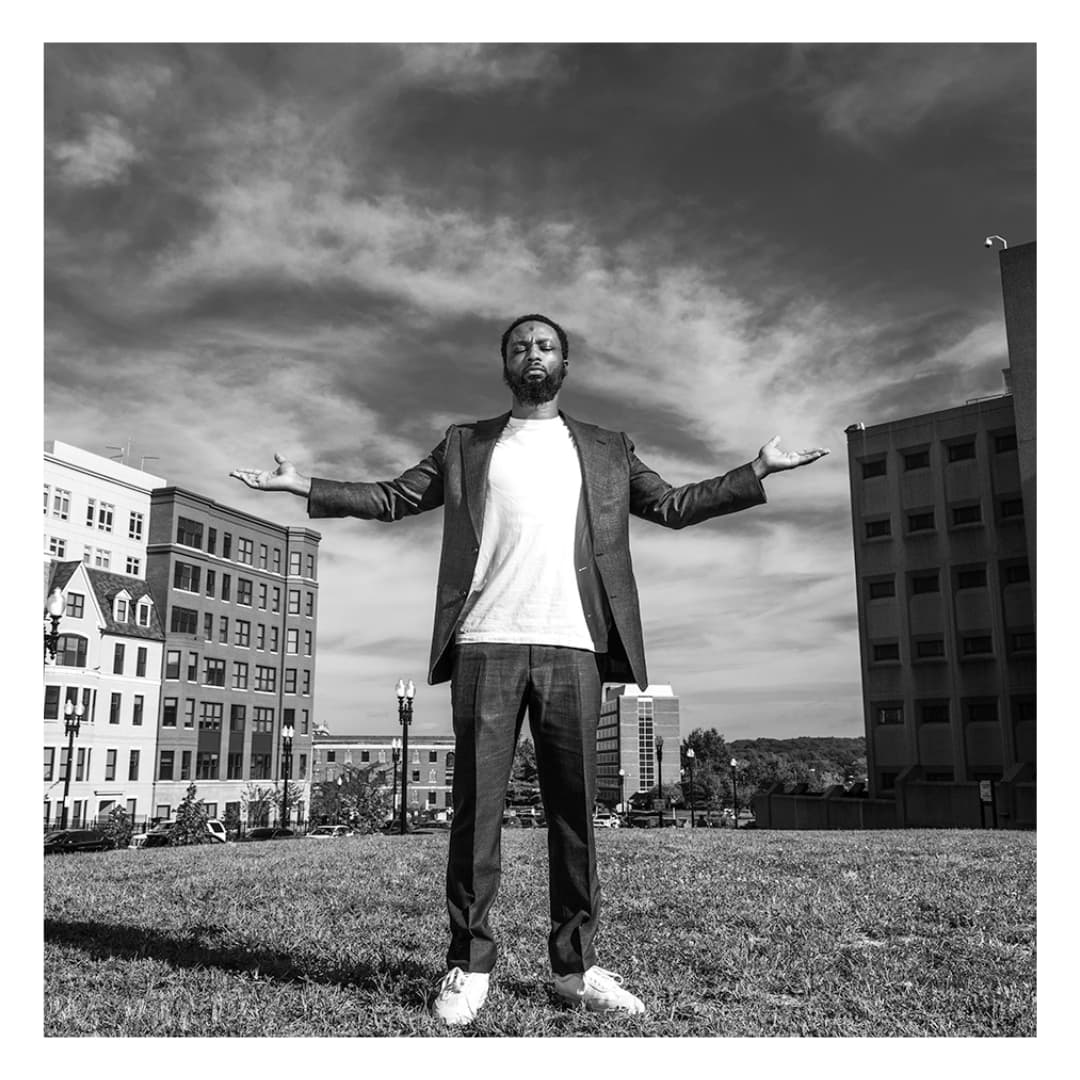
“Animation teaches you how to create a world from the images in your mind that don’t exist in the real world.”
It is the first time, he tells me, that he has made this particular connection in an interview.
As a child, cartoons had given him softness, humor and possibility amid the harshness outside his window. Later, he found himself inside an environment explicitly constructed to control movement: locks, chains, fences, gun towers.
And yet the ability to imagine remained his.
No institution could completely confine it.
Flowers also drew strength from reading about people who had endured extreme circumstances before him—Nelson Mandela, Geronimo Pratt, Angela Davis, George Jackson and Viktor Frankl among them. What began with people whose histories felt connected to his own gradually expanded into something larger: an understanding of suffering, survival and meaning as part of the human experience.
He became interested not only in how people survived difficult circumstances, but how they alchemized them—how suffering could be transformed into purpose without allowing the circumstances themselves to determine one’s value.
That idea of value comes up again and again in our conversation.
So does power.
Flowers makes a distinction between authority and power.
Institutions can possess authority. Governments can make laws. Courts can issue sentences. Systems can dictate where a body is allowed to exist.
But Flowers does not believe that automatically makes them powerful.
Power, as he understands it, can exist independently of an institution.
An artist can walk into a room without an elected office, military, corporation or government behind them and still move thousands—or millions—of people.
“That’s why people in authority always want to connect with powerful art.”
Artists possess something institutions cannot manufacture simply by granting someone a position. They possess the ability to make people feel. To imagine. To see themselves differently. To believe another reality might be possible.
Who Gets to Define Our Value?
Flowers tells me that one of the keys to wellness is the ability to define our own value.
If we don’t, he argues, we begin searching outside ourselves for systems capable of assigning it to us: money, titles, institutions, consumption, proximity to people or things society has already declared valuable.
For artists, this becomes especially complicated.
We create things whose effects are often impossible to quantify, then enter systems that insist on quantifying them anyway.
How much is a painting worth? A song? A photograph? A poem that gets someone through the worst night of their life? A performance that gives someone permission to become themselves?
Flowers is interested in the economics of that contradiction.
During our conversation, he brings up media impact value—metrics designed to assign monetary value to cultural influence and media exposure. His question is simple: if other industries can invent systems for measuring the economic impact of culture, why aren’t artists creating their own?
“We must start to create our own indexes and measure our value.”
It is an idea that extends beyond compensation.
Because value affects wellness.
If someone continually contributes meaning, beauty, connection and culture to society while being told—explicitly or implicitly—that what they produce has little economic worth, something fractures.
Flowers wants artists to understand not only their creative value, but their intellectual property, equity and ownership. Not simply so they can make money, but so that the value they spend their lives creating can remain connected to them, their families and the generations that follow.
Near the end of our conversation, he talks about the time artists sacrifice to make the things that affect other people’s lives—the Zoom calls, the talks, the albums, the paintings, the hours away from family.
If the work continues generating value after the artist is gone, he believes artists should understand how to retain equity in what they have created.
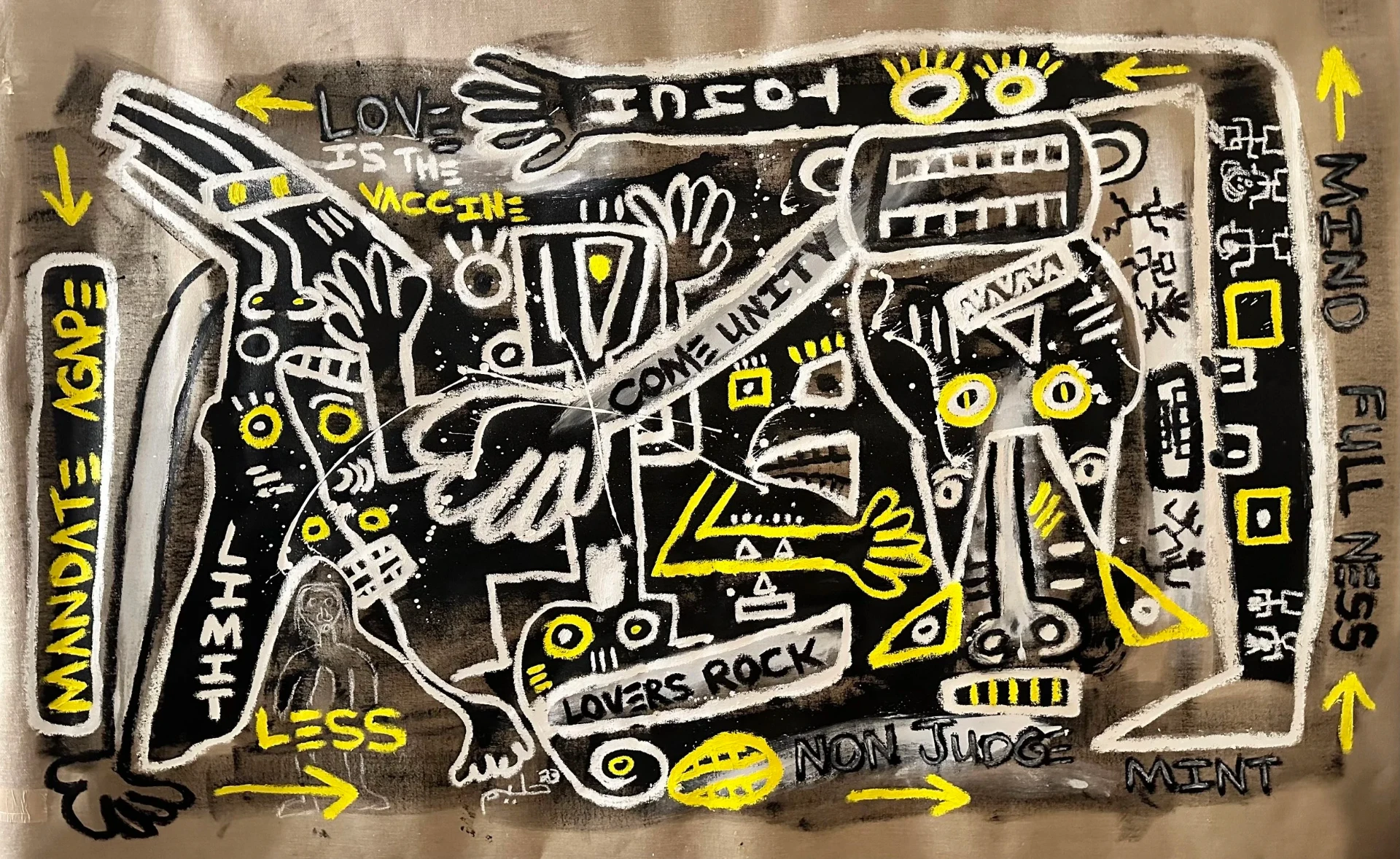
Acrylic and oil pastel on canvas
Creativity and the Practice of Feeling Well
When I ask Flowers directly about the relationship between creativity and mental health, he doesn’t begin with research.
He begins with feeling.
There is something that happens when he walks into a museum. When he paints. When he makes music in the studio. When he listens to music or stands in front of someone else’s work.
“It’s something that makes me feel well.”
For Flowers, that is where emotional health begins.
Creativity can shift our internal state. It can give us access to feelings we may otherwise struggle to reach.
But he makes an important distinction.
The art can help get us there. The deeper work is learning how to remember that state when the art is no longer directly in front of us.
How do you carry the feeling you experience listening to a song you love into rush-hour traffic? How do you preserve what a museum opened inside you when you’re dealing with a difficult colleague, family member or stranger?
Flowers describes creativity as a kind of boost, but maintaining the internal state it helps us access is where mental health comes in.
Creativity, in his formulation, becomes both an experience and a practice of remembering.
It reminds us what feeling well feels like.
The work is learning how to return there.
What If We Designed for Healing?
Eventually our conversation returns to the system in which Flowers spent more than two decades.
I ask him to imagine something.
If he could redesign prisons as places genuinely intended for rehabilitation, what would they look like?
His first answer isn’t punishment or even programming.
It’s design.
Beauty.
Architecture.
Technology.
Creative tools.
“Designed to heal.”
Flowers questions why beauty and intentional design are treated as rewards that incarcerated people should be denied rather than environmental tools capable of influencing behavior and well-being.
If the stated outcome is public safety, he argues, then the environments people inhabit before returning to the public should be designed around that outcome.
He imagines incarcerated people having access to contemporary technology, including AI, and being challenged to solve actual problems. Applications. Curricula. Literacy. Health. Community safety.
Instead of manufacturing objects simply to occupy time, why not give people societal problems and invite them to build solutions?
There is enormous human capital sitting behind walls. There is also something incarcerated people possess in unusual abundance: time.
Flowers wants us to reconsider what might happen if we combined that time with tools, education, imagination and incentive.
During our conversation, a phrase emerges for the idea:
“Let em cook.”
We both have an a-ha moment.
We realize this phrase could become an entire campaign for prison rehabilitation—one that Halim could spearhead.
And then we realize neither of us is entirely joking.
Because beneath the phrase is a serious question: what would happen if incarceration were designed not simply around punishment, but around human potential?
“Let them know all the problems with society,” Flowers says, and give them an incentive to work their way out by creating solutions.
“We need solutions. We need solutions big time.”
Weapons of Mass Construction
Near the end of our conversation, I return to a phrase Flowers has used to describe his philosophy: weapons of mass construction.
The idea is deceptively simple.
Tools can be used to harm people.
Flowers chooses to use his to construct things that heal and help people.
And his definition of art is deliberately expansive.
Painting is art. Poetry is art. Music is art.
But so is making a curriculum. A podcast. A conversation. A community. A collective. A manifesto.
“The etymology of the word art means to make.”
Whether you make a curriculum, a podcast, an initiative, a conversation or a community, Flowers argues, you are creating.
Perhaps this is where the story circles back to the seven-year-old boy watching animation in Washington, D.C.
Before the paintings, galleries, commissions, exhibitions, speeches and advocacy, there was a child discovering that another world could first exist inside his imagination.
Before you can construct something, you have to be able to imagine it.
Flowers carried that ability through an environment built to restrict nearly everything else.
And today, when I ask what he hopes people understand about him beyond the headlines, his answer is remarkably simple:
“Imagination. Play. Authenticity.”
He doesn’t want to become too adult to play or too afraid to simply be.
When I ask what still keeps him creating after everything he has lived through and everything he has already made, his first answer makes us both laugh.
“Bills.”
But then he gets serious.
Even if money were no longer a concern, he tells me, he would still create.
Because creativity, to Flowers, is not a profession confined to making paintings or poems.
It is creating life.
It is identifying a problem. Imagining something that does not yet exist. Developing a solution. Building people around it. And then making it real.
Flowers tells me his goal is to become one of the most impactful artists of all time—not necessarily by commanding the highest prices, but by changing the way artists approach their craft and understand their own value.
Maybe that is one of art’s most profound relationships to health.
Art does not simply decorate the world we already inhabit.
Sometimes it gives us enough imagination to survive that world.
And sometimes, if we keep making, it gives us the tools to construct another one.
Conversation by Violetta Markelou for LŪMEN — art, health, and the human experience.